

A thriller without a twist is like a joke without a punchline. The story might be engaging, the characters might be compelling, but what keeps readers talking long after they’ve turned the final page is that sharp intake of breath, the moment when everything shifts.
And getting it right is a balancing act. It needs to be surprising, but not so left-field it’s unbelievable. Exciting, but not so insane it feels ridiculous. So what makes a plot twist work?
The Element of Surprise — With Rules
The obvious answer is surprise, but the best twists do more than shock. They feel inevitable in hindsight. I like to be able to flick back through the pages and spot the breadcrumbs I missed the first time around. Agatha Christie was the master of this; her reveals work because she plays fair, giving you the clues but hiding them in plain sight. I remember sitting down to read Murder on the Orient Express for the first time and drawing myself out a little plan of the train so I could follow the clues. Of course, once I got to reading I was just captivated anyway but I could see how she’d put it altogether with the benefit of hindsight.
Twists as Character Reveals
A twist shouldn’t be just about plot mechanics. At its best, it reveals something deeper about character. Gillian Flynn’s Gone Girl, for example, delivers a turn that doesn’t only shock you, it forces you to reassess everything you thought you knew about its central couple. The twist works because it’s about them, not just about the plot.
Shifting the Ground Beneath the Reader
Some twists aren’t about “who did it” at all; they’re about changing how the story feels. In Rebecca, Daphne du Maurier pulls the rug out from under the reader in a way that reframes the entire emotional core of the novel. Suddenly, the characters and relationships look different, even though the facts haven’t changed. That’s the kind of twist that lingers. I love this kind of thing too because it brings you so much closer to the characters in the story. You experience the same kind of things that they do.
Building Tension Through Doubt
Twists thrive on uncertainty. An unreliable narrator, gaps in memory, or conflicting accounts all prime us to expect the unexpected. Paula Hawkins uses this brilliantly in The Girl on the Train, where the hazy perspective makes the eventual reveal feel both shocking and completely earned.
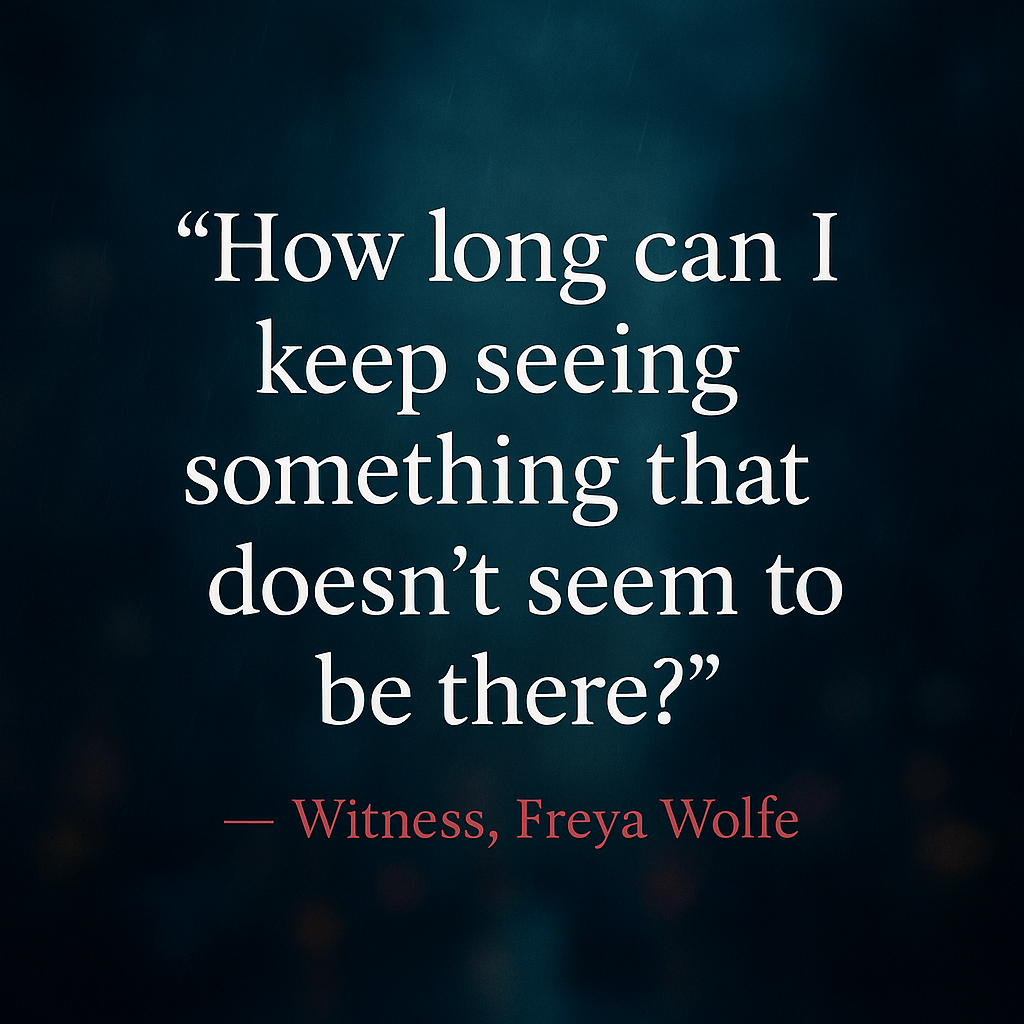
“How long can I keep seeing something that doesn’t seem to be there?”
This kind of uncertainty is central to Witness. Sadie knows what she saw, but when others begin to question her memory, the tension builds not from action alone, but from doubt. Is she right? Is she wrong? Or is the truth more complicated still? That pressure, the slow erosion of certainty, is what allows the eventual twists to land with real force.
Why They Matter in My Writing
When I was writing Witness, I kept returning to these questions. Is the twist surprising enough to jolt the reader, but believable enough to feel true? Does it grow naturally from the characters, rather than being bolted on for effect? Above all, would it make the reader want to go back and reconsider everything they’d just read?
Because that’s the true magic of a twist: not just making you jump, but making you think.
 freyawolfe.com