

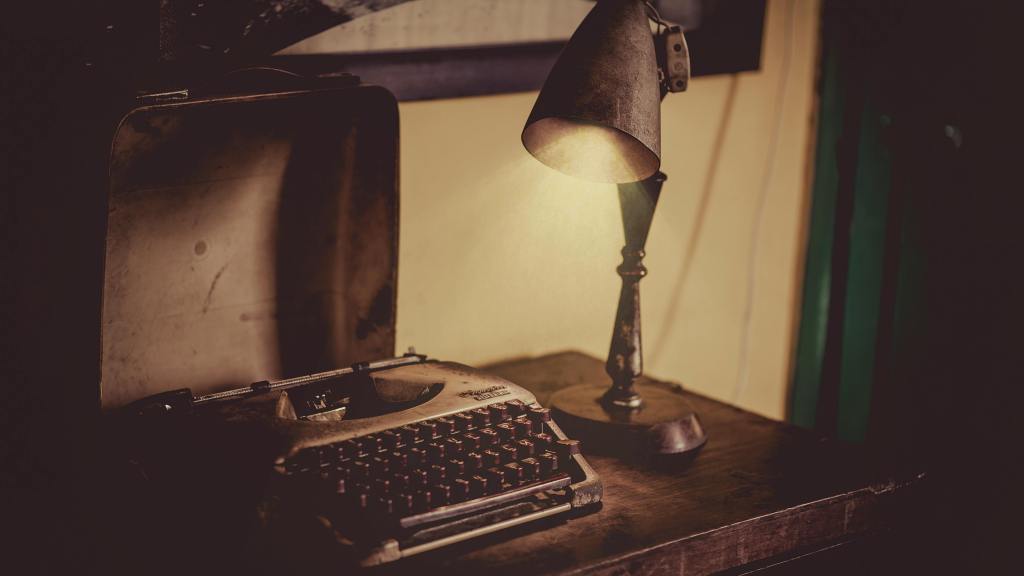
People often imagine thriller writing as a glamorous pursuit — tapping away at a typewriter in a dimly lit room, sipping whisky, and staring dramatically into the rain until inspiration strikes.
In reality? Not so much. Writing a thriller is as much about spreadsheets and coffee refills as it is about sudden flashes of genius. Especially when you’re getting to a certain age and can’t see very well in dim light and whisky upsets your stomach!
Here are five things you might not know about the process:
1. You become an expert in the strangest things
While working on Witness, my search history started to look… suspicious. Bus timetables. CCTV camera angles. How long it takes to disappear into a crowd. I’ve also spent a frankly worrying amount of time researching obscure corners of the law. If you write crime fiction, you accept that one day your Google history may be used against you. To be fair though, my non-writing Googling is probably just as sinister; have you ever searched ‘How do I tell if my chicken is dead?’… I have.
2. You’re always planting seeds (even if you don’t realise it)
A good thriller relies on foreshadowing, clues hidden in plain sight. Sometimes, I plan these from the start. Other times, I discover them by accident when I re-read my draft and think, ‘Oh, that’s clever – I’ll pretend I meant to do that.’
3. The ending changes… often
When I start a book, I think I know exactly how it will end. Then a character refuses to co-operate, or a subplot takes an unexpected turn, and suddenly I’m rewriting the final chapters. With Witness, the ending I wrote first was nothing like the one I published. And I’m glad; the real ending hits much harder.
4. Ordinary moments become suspicious
Once you’ve trained your brain to think like a thriller writer, everyday life feels different. You start noticing tiny details: who lingers too long at a café, the way someone looks over their shoulder, a door left ajar. In Witness, one of the most important scenes started as a fleeting moment I saw while walking home.
5. It’s not just about the crime
Yes, the mystery matters. But what keeps readers turning pages is the people. The relationships, the trust (and mistrust), the question of how far someone will go to protect what they love. That’s why, even though Witness has a tense, twisty plot, it’s really about Sadie, an ordinary woman whose life changes in a single moment. It’s not just lies we tell others though. It’s the lies we tell ourselves. Sadie isn’t as good as she thinks she is.
Writing thrillers isn’t glamorous. It’s messy, surprising, and occasionally involves staring at the ceiling wondering how to get your protagonist out of a locked room. But for me, it’s the best kind of storytelling, tense, human, and impossible to walk away from.
And if you’re curious about the strange, twisty path Witness took from idea to finished novel… you’ll be able to read it very soon!
 freyawolfe.com